Date
11 Nov 2025
Category
Materiality
Basha-Franklin Façade Innovation
Necessity is the Mother of Invention

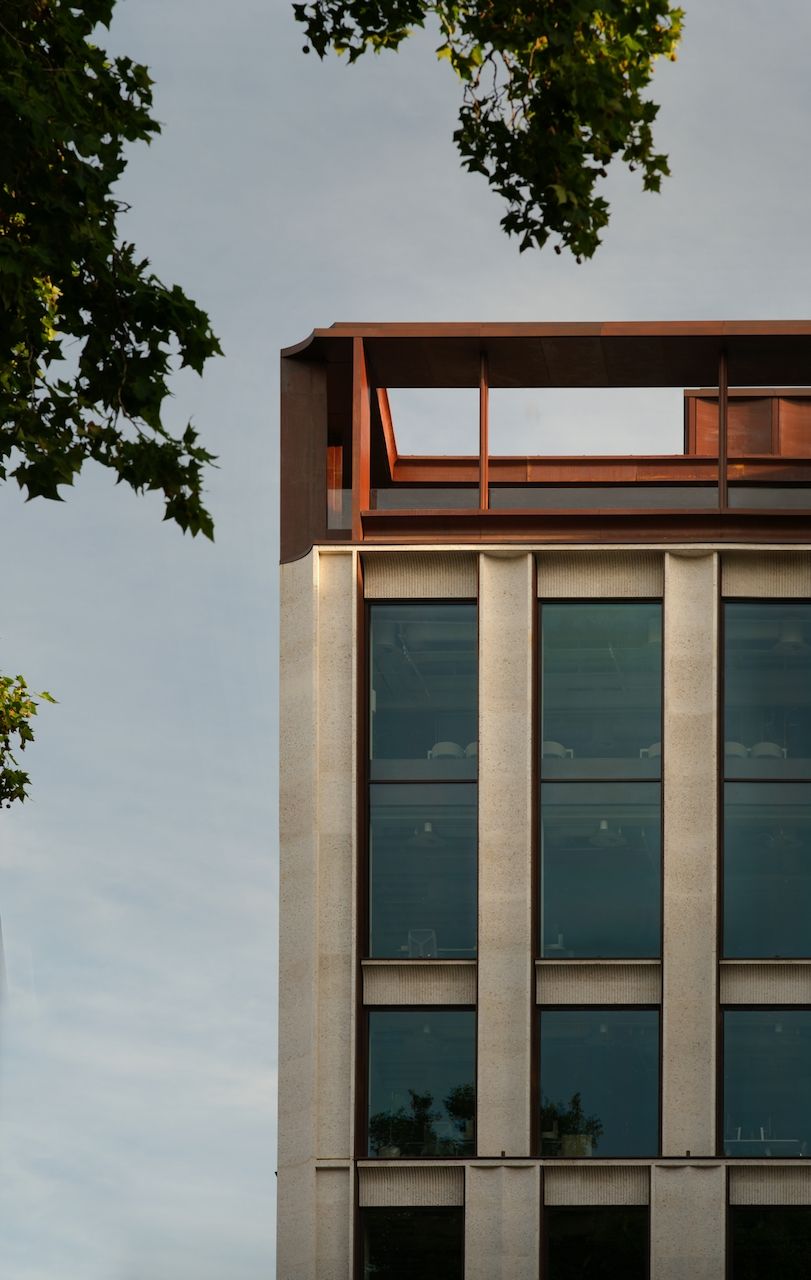
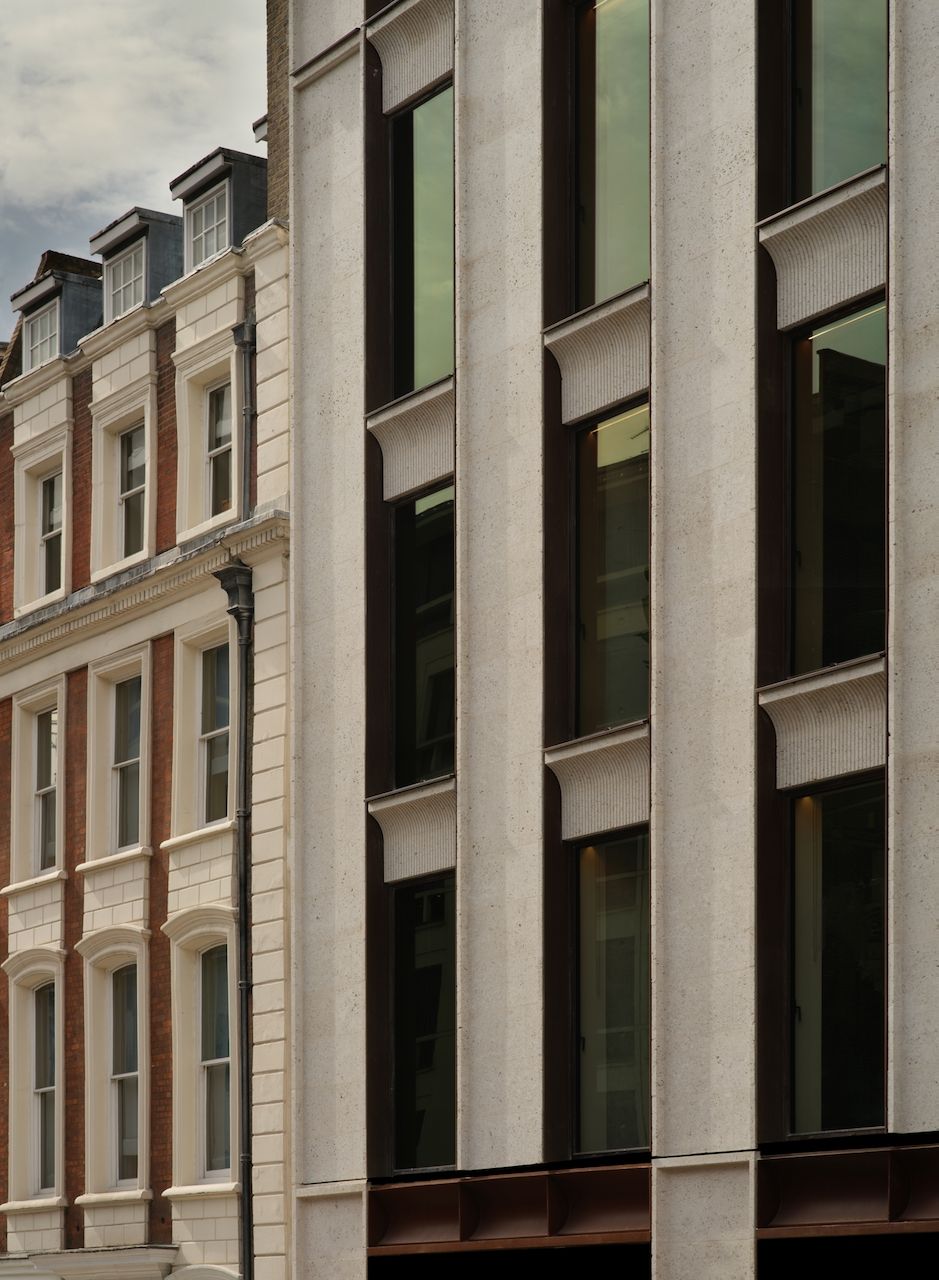
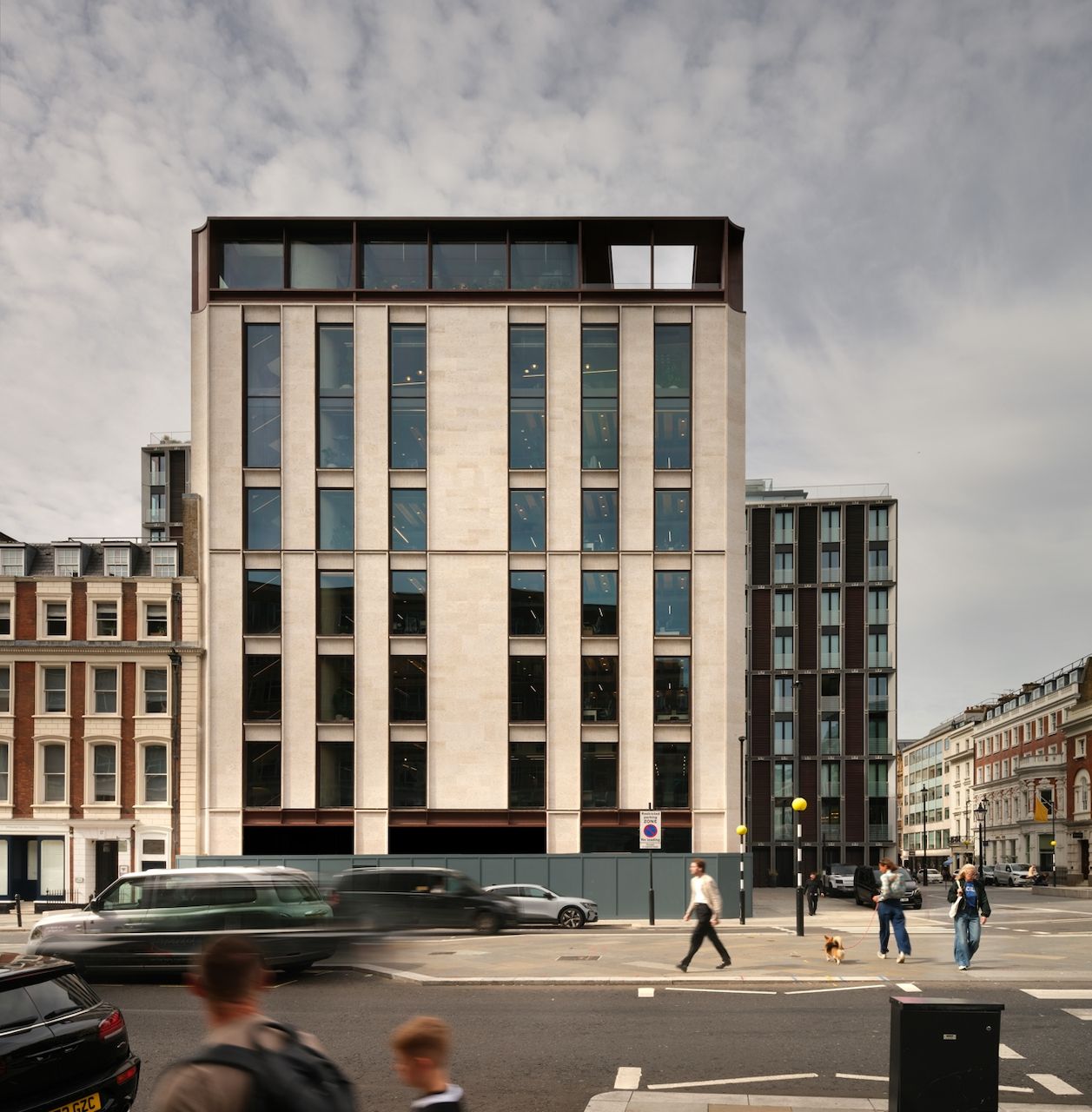
Guided by our passion for finding authentic materiality and meaning as a response to this context and setting, our point of departure for the reimagined façade was to work with a Portland limestone akin to that of the original 2004 building, which alongside Georgian red brickwork, were the two predominant facing-materials used on Hanover Square.

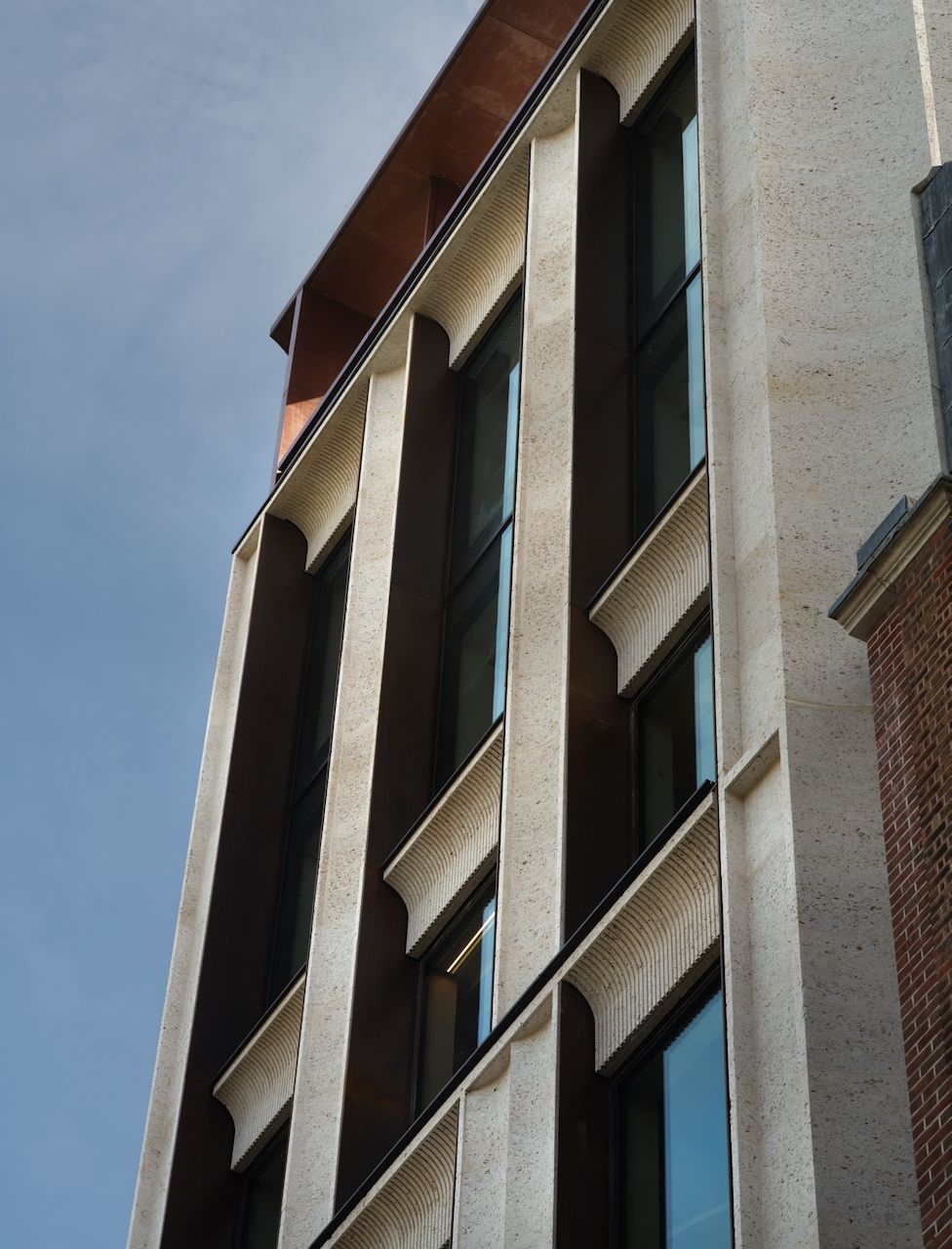
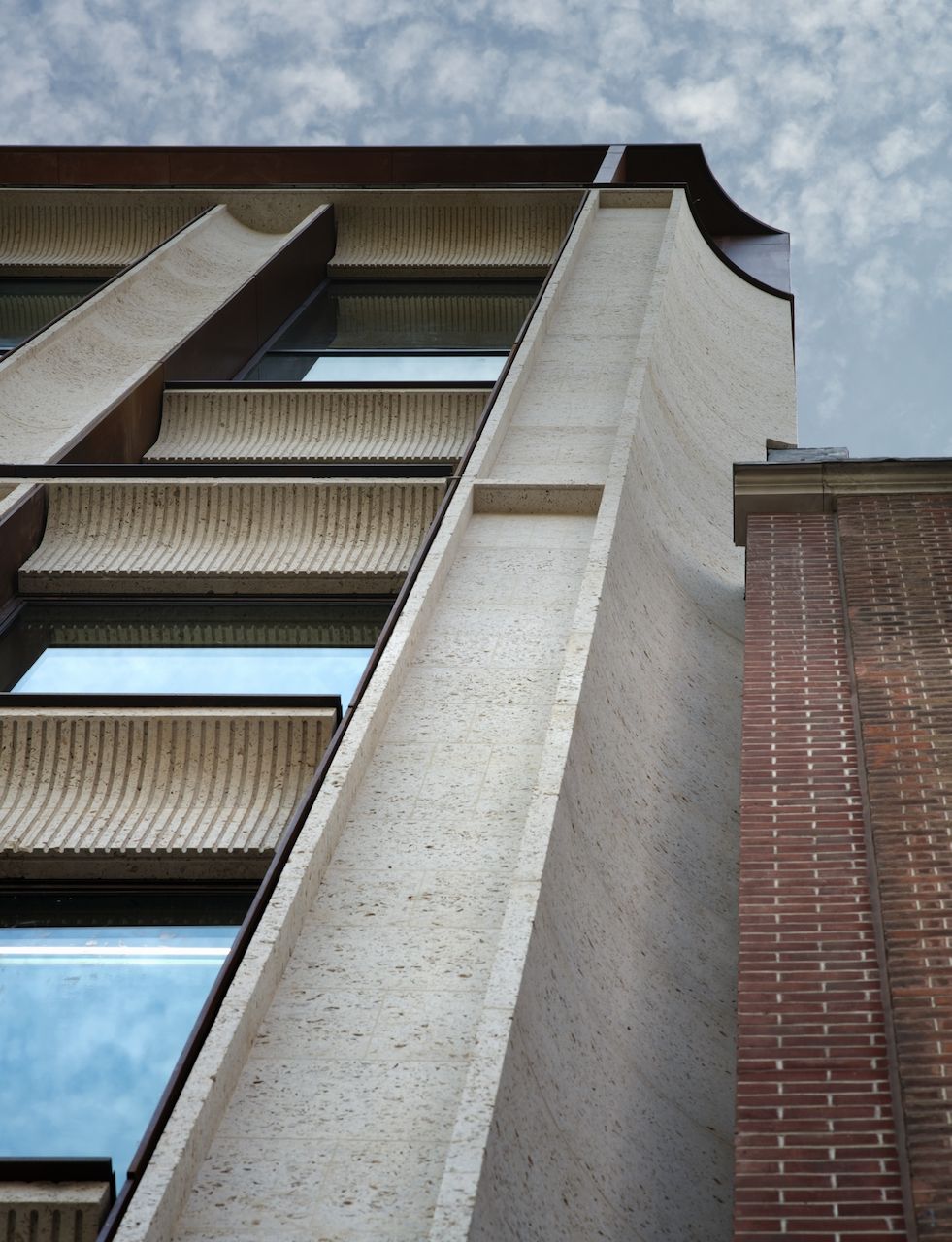
To the South, along St George Street, red brickwork gives way to stuccoed architectural details which come to the fore, and we reframed sympathetic material selection as an opportunity to explore the character and depth that more varied, shellier beds of the limestone reef might offer this urban marker to the Square, whilst creating a unique tension between the refined dimensional stonework and the rawer aesthetic of weathering steelwork.
Circular Materiality

We were particularly drawn to the use of weathering steel (Corten) for its alignment with circular design principles. Composed of low-alloy elements, it is 100% recyclable and can be reprocessed indefinitely without loss of quality. Its self-protecting patina eliminates the need for applied coatings, reducing maintenance and avoiding chemical treatments. Over its long lifespan, weathering steel delivers a lower whole-life environmental impact, aligning with our commitment to longevity, integrity and responsible material use.

Innovation Success Model: Technical Collaboration

Basha-Franklin’s Architecture Director, Alex Franklin, collaborated closely with design engineers Pipsqueak and façade specialists Fortis Facades to explore the interaction between Portland limestone and weathering steel. Putney & Wood were commissioned to provide early stonemasonry advice, and the team was completed with metalworker Elite Metalcraft and window sections by JFAN supplying Guardian Glass window units.

Following months of research and testing, the team discovered that both materials could be protected successfully using two natural sealants. For the stone we used a biodegradable nanotechnology sealant, an invisible, water-repellent treatment that preserves the tactile and visual qualities of each material. For the Corten we used a water-based sealant. This deepens the oxidised Corten’s appearance, so this was protyped to arrive at a tone which, in close dialogue with the Client, we felt was befitting contextually. Both sealants are British products, made in the UK.

Mock-Up and Testing

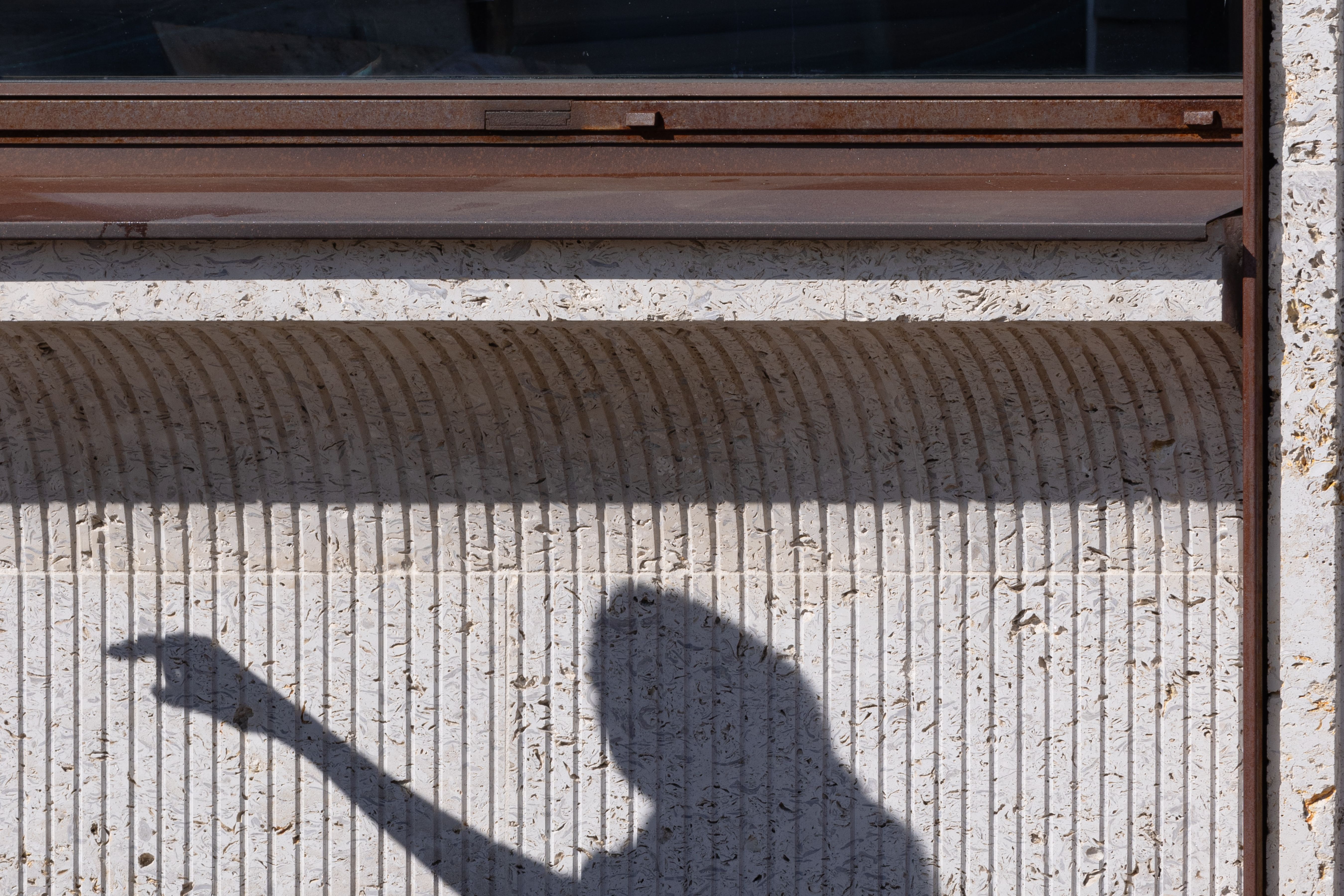
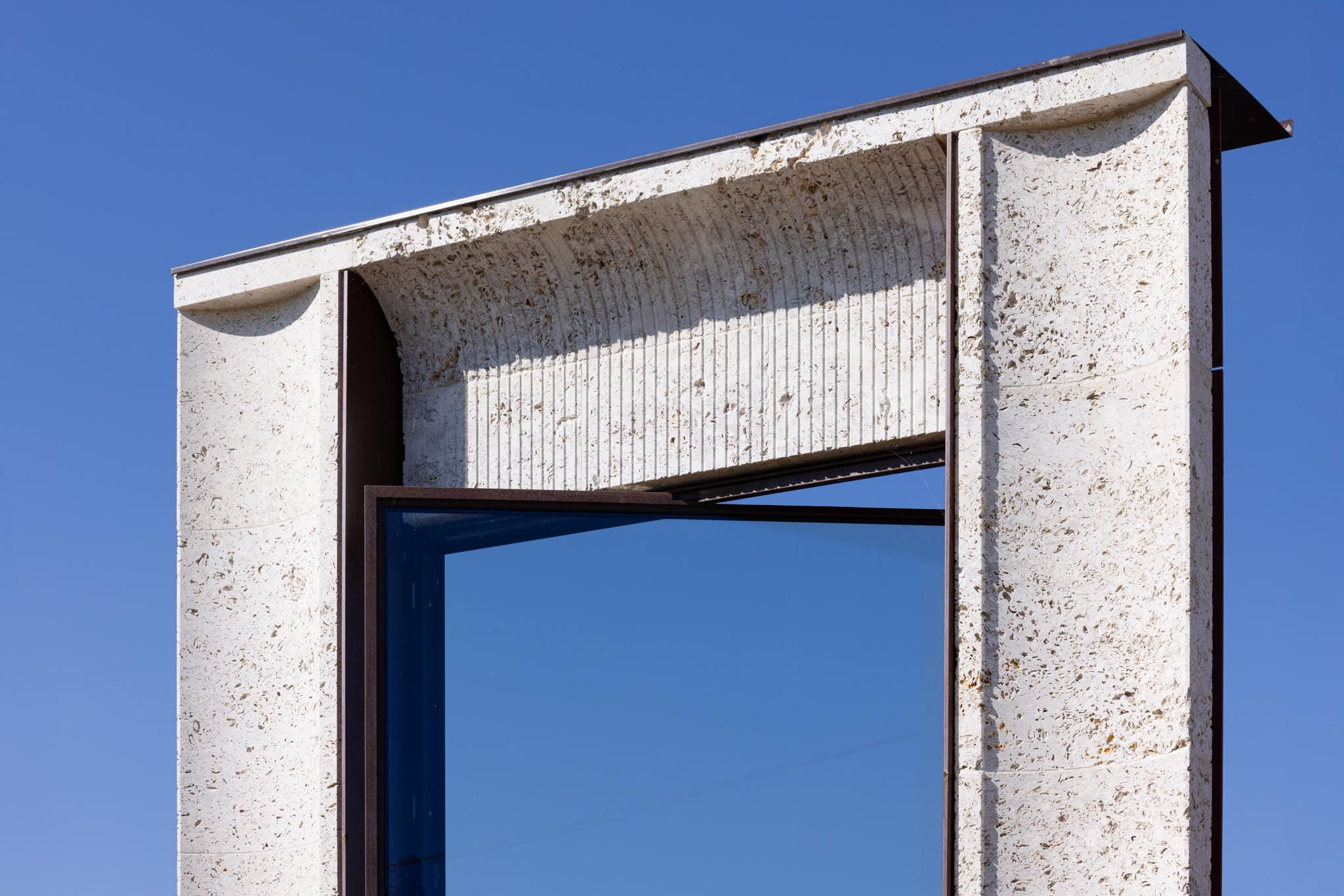
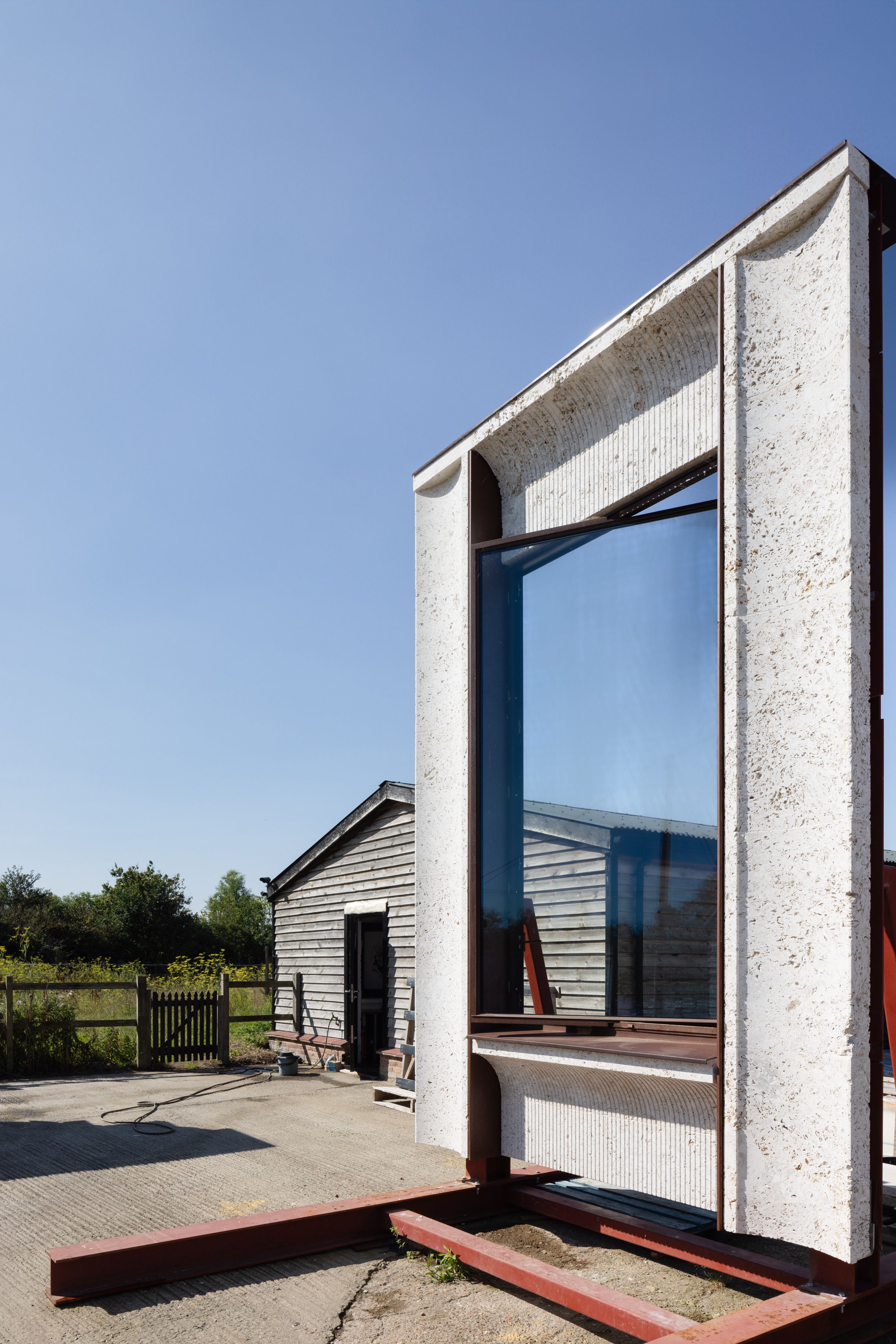
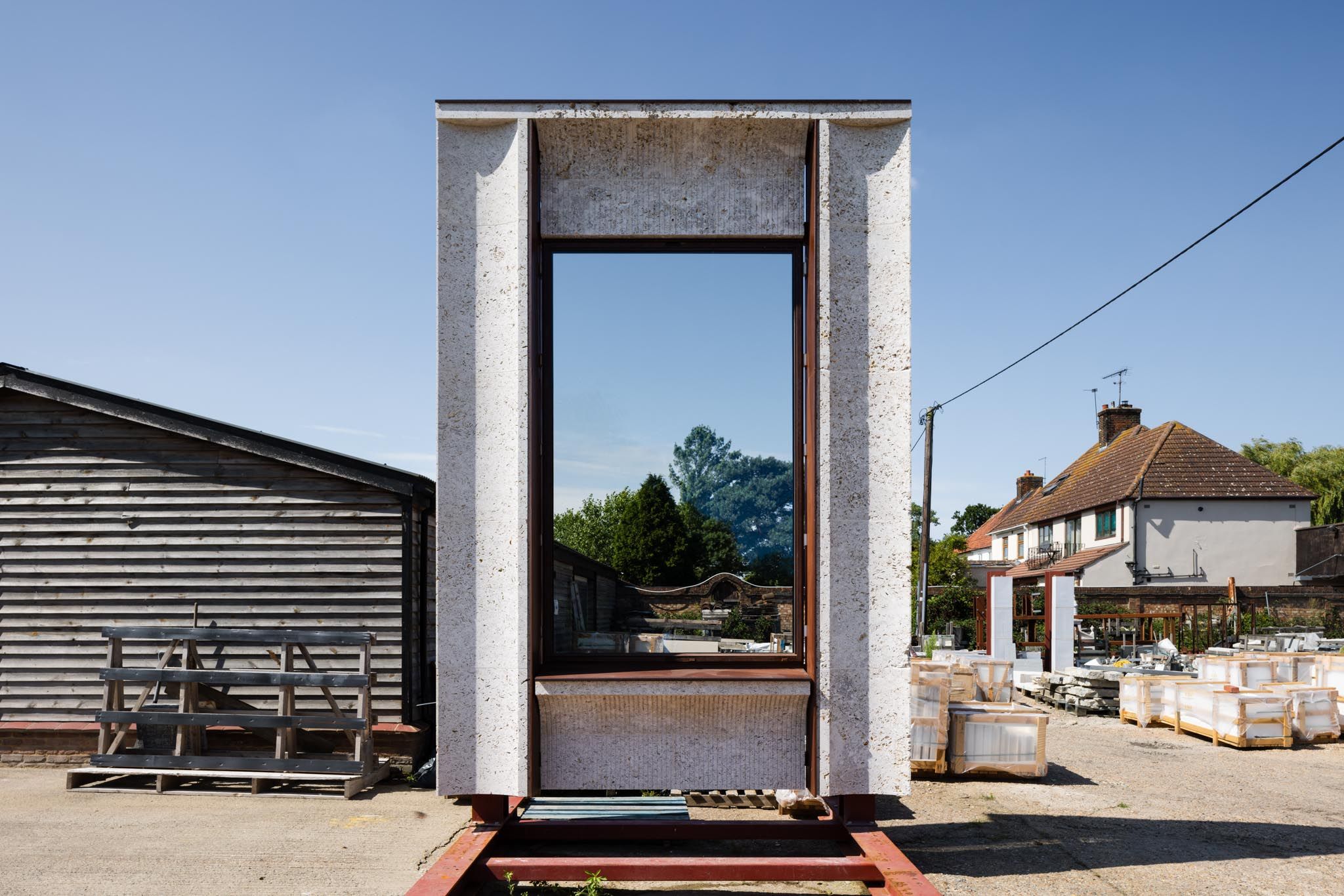
To validate this pioneering approach, our Client commissioned the construction of two 1:1 scale façade visual mock-ups to test aesthetic and material behaviour once exposed to the elements. The façade pieces were designed to separate water run-off from the weathering steel with the Portland limestone. Integrated drainage channels included magnets to extract staining iron oxides from the water, ensuring a true mechanical separation between the materials and preventing discolouration over time whilst ensuring water clean of rust particulates would not be introduced into the watercourse.

Local Materials

At Basha-Franklin, our design DNA begins with locally sourced materials to reduce carbon impact and celebrate regional provenance. The limestone for 25 Hanover Square was sourced from the Isle of Portland, chosen for both its proximity and its deep connection to London’s architectural history.

We tested the use of two beds of limestone, one a newly discovered geological bed dating back roughly 145-150 million years, and never used in central London before. Its speckled texture, formed by minute crystalline deposits, provides a distinctive visual depth. However, the fine arises required to the North façade showed the Ostrea Patch Reef Whitbed to be too ‘vuggy’, whereas the Grove Whitbed behaved better when being finely dressed. This demonstrates the importance of mocking up complex façade designs when working with natural materials, as variations within the stone demanded careful design calibration to strike a balance between natural character and the refined architectural expression appropriate to Mayfair.

Forgotten British Limestone

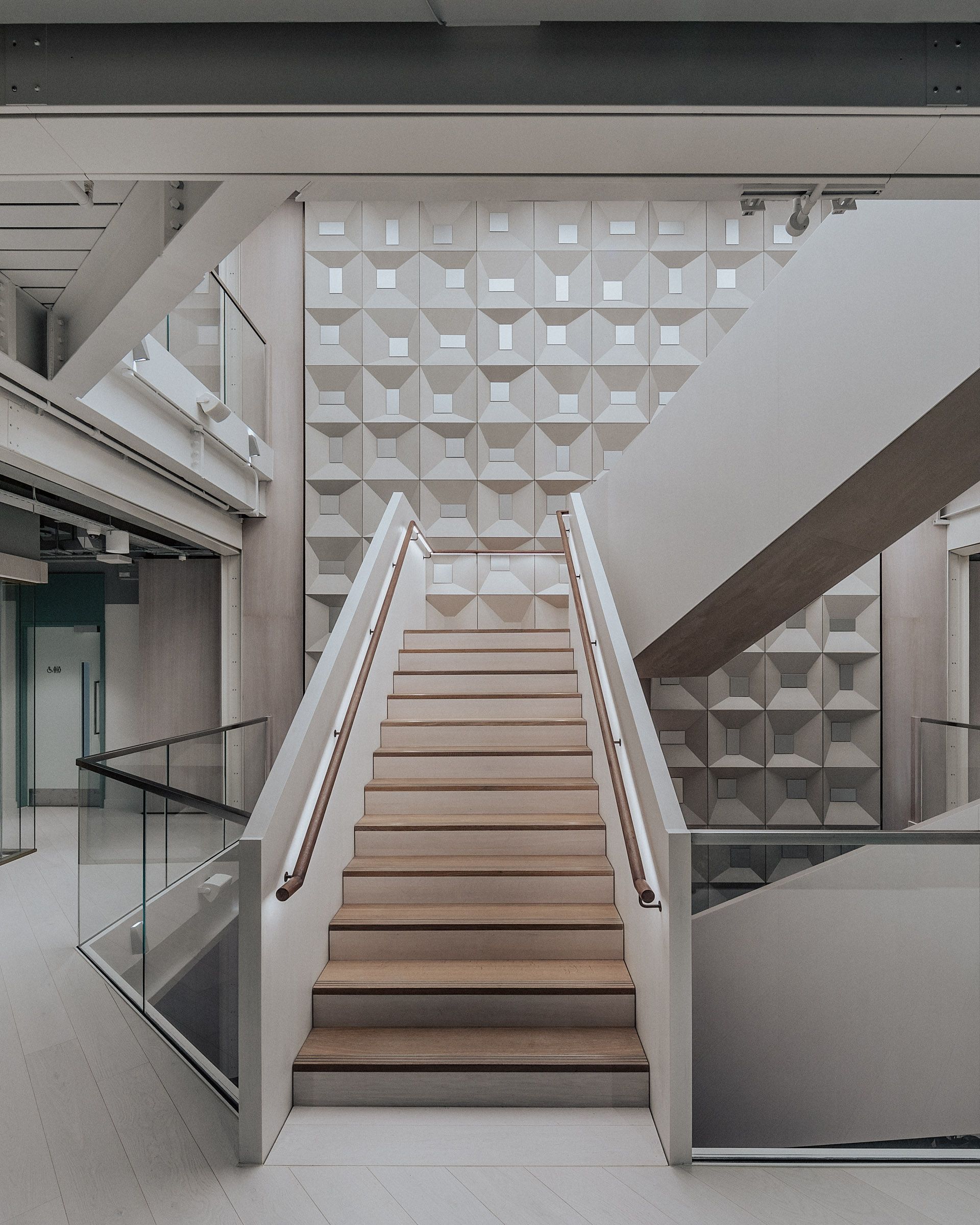
At ground level and within the interiors, we specified Moorcroft Grey, a limestone from Devon supplied by Britannicus. Its veined and variegated appearance brings warmth and dimension to the façade. The Moorcroft limestone's vein variety, featuring white calcite and pink swirls, offers a marble-like richness while retaining the honest qualities of limestone.

Historically quarried in the Plymouth region for building stone, agricultural lime and cement, Moorcroft is a largely forgotten material, now primarily used as aggregate in tarmacadam for road surfacing. We were therefore excited to reintroduce this beautiful local stone in an architectural context, giving it renewed relevance and expressive purpose.

Glass

Complementing the stone and steel façade, high-performance glazing by Guardian Glass introduces transparency and lightness. With a low G-value which helps to reduce heat gain (omit UV transmission) yet permits uniquely high levels of natural light transmission. The glazing enhances visual permeability between the interior and exterior. This connection draws the ground floor lobby into the public realm, creating a welcoming, experiential threshold that elevates both the building’s civic presence and user experience.

Innovation, Materiality and Sustainability

At Basha-Franklin, we see innovation not as novelty but as meaningful progress, the product of curiosity, collaboration and courage. Our approach to materiality is guided by respect for context, craft and performance, always seeking to balance aesthetic refinement with environmental responsibility. By challenging convention, embracing technical partnerships and prioritising low-impact, locally sourced materials, we aim to create architecture that is both enduring and regenerative: design that celebrates the intelligence of materials and the possibilities of thoughtful innovation.

Proof of Concept Success
The Visual Mock Ups were initially erected Q2 2022. The design was adjusted over coming months as the team trialled patination results between conditions in Portugal where the Secco window frames were being procured, and Perivale in West-London where the architectural metalwork was made. This process was concluded by Q1 2023, and the mock ups have been in place (over 2.5 years), providing the Client, Contractor and Design Team with the confidence to progress to Construction for the façade for 25 Hanover Square, and acting as 1:1 quality benchmark for the build.
To Read our Building Design Article:Click here
Related Articles
Explore additional articles that are closely related to this topic.